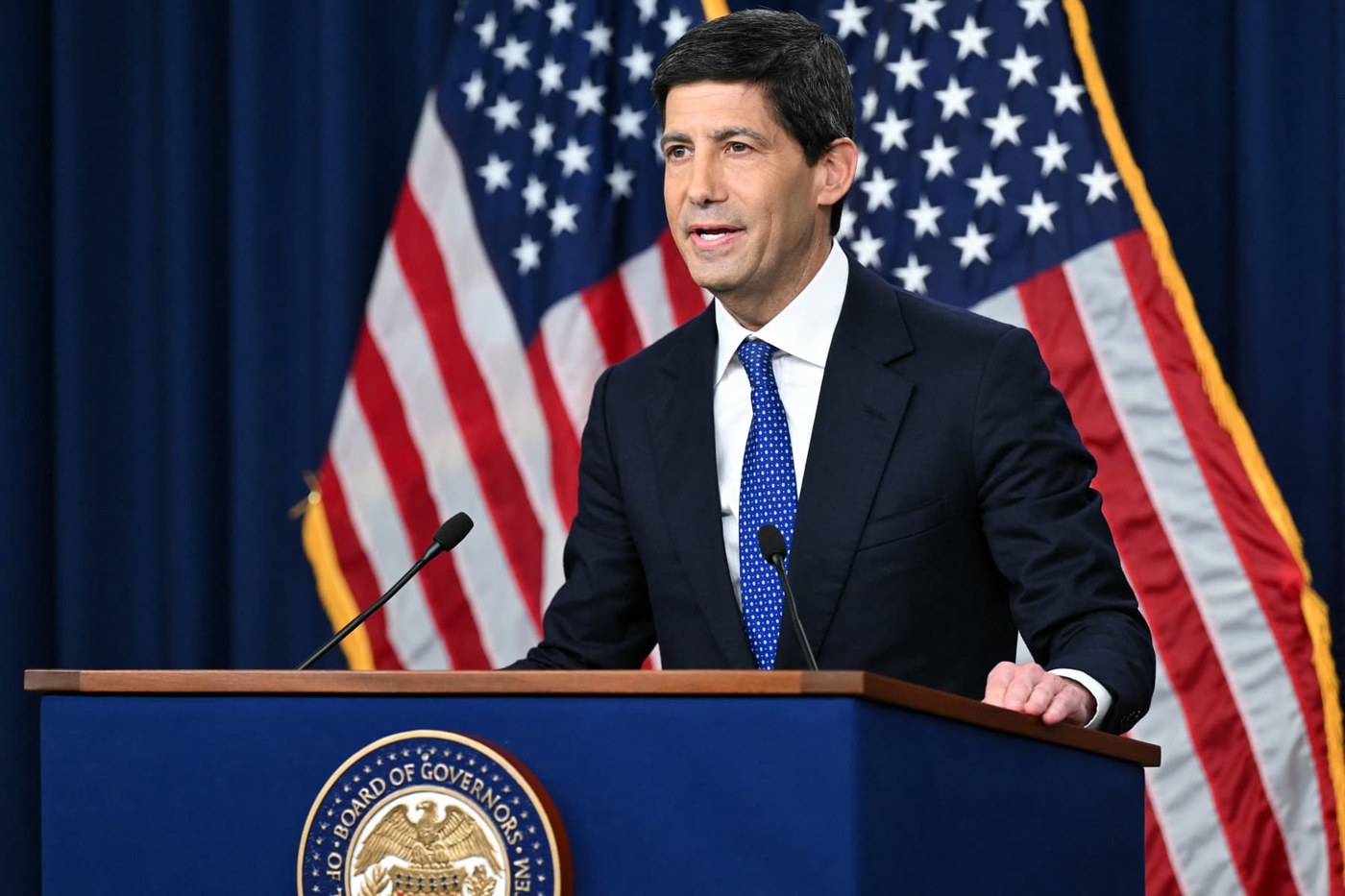
Federal Reserve officials enter this week's policy meeting amid a critical debate over what the central bank can, should and will do to address an inflation problem that shows no immediate sign of going away.
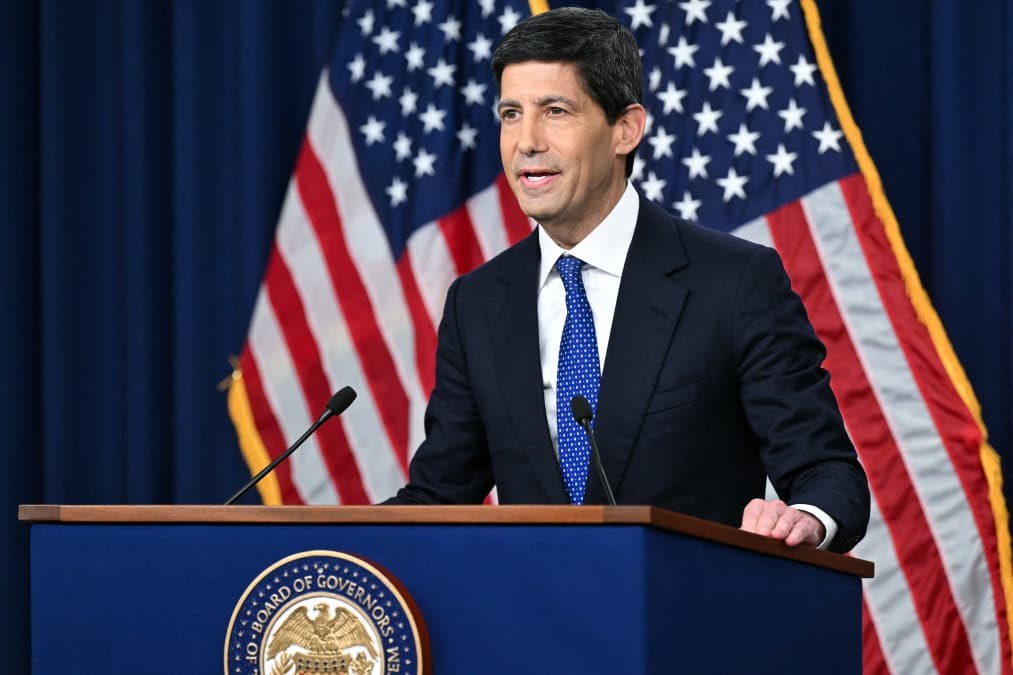
When the rate-setting Federal Open Market Committee does release its decision Wednesday, markets overwhelmingly expect no change in benchmark interest rates following September's quarter percentage point rate increase.
Investors will be looking closely, though, for clues about future moves from policymakers, and Chairman Kevin Warsh in particular.
Brett Ryan, senior U.S. economist at Deutsche Bank, said he'll be watching what Warsh will signal about future policy moves — something the Fed chairman has said he is highly reluctant to do as he seeks to move the Fed away from the "forward guidance" practice of most of the 21st century.
The chairman "is likely to signal that recent inflation data reinforce expectations from the September meeting that further tightening will likely be needed over time," Ryan wrote in a note to clients. "However, skipping October allows officials more time to assess trends in the data."
Inflation heats up
Recent inflation data has offered little respite from the price pressures that intensified earlier this year.
The consumer price index, a widely cited inflation barometer, showed the annual rate at 3.7% in September, driven largely by soaring energy prices. Even stripping out volatile gas and groceries costs, core CPI pointed to a 2.6% rate — still well above the Fed's 2% mandate and heading in the wrong direction after climbing 0.3 percentage points from August.
At the same time, recent economic data has shown the housing market struggling further under the pressure of mortgage rates above 7%. The labor market, meanwhile, has settled into a low-fire low-hire pattern where layoffs are around their lowest levels since the late 1960s while people out of work struggle to find jobs.
Calibrating policy under current conditions is complicated by Warsh's push for a more mercurial Fed that avoids signaling where policy is heading, preferring for markets to take their own signals from incoming data.
A pause this month could give the Fed more time to assess what impact the prior rate hike had on the economy and financial conditions. However, signaling tighter policy could put more strain on the housing and labor markets. Warsh and his colleagues must show they are prepared to contain inflation while avoiding a premature commitment to how far or how fast rates will rise.
Essentially, the Fed can use its interest rate to influence inflation. It almost certainly will hold off doing so as it evaluates current conditions. Markets and economists, though, are at odds over what it should do.
'Material execution risk'
The chance of a mistake under those circumstances is significant, according to Krishna Guha, head of economics and central bank strategy at Evercore ISI.
"It ought to be possible for Warsh – who is alert to market risks even though he professes not to like mollycoddling investors – to show a calming steady hand," Guha said Monday in a note. "But there is material execution risk."
For instance, the Fed's lack of detail on how it sees the risks to its dual mandate of low inflation and full employment as well as how it views both the pace and tightening of monetary policy poses substantial challenges.
While inflation data has been hot, the unemployment rate has been fairly steady.
The Fed also weighs financial conditions when figuring policy. The Chicago Fed's index of financial conditions has shown a slight tightening since the September hike, a product of stock market volatility, among other factors.
Recent chatter out of key Fed officials, such as Vice Chair Philip Jefferson and New York Fed President John Williams, points to the likelihood of hikes at every other meeting. But how far the Fed will need to go remains a mystery.
Guha interprets remarks Warsh gave to the World Bank and International Monetary Foundation in Bangkok recently as aligning "with the central view" on the FOMC. In practice, that's a Fed moving "at a deliberative and methodical baseline pace of once per quarter without prejudice to what it learns along the way and how far it might ultimately have to go and whether at some point later down the line it might need to speed up."
"If inflation continues to disappoint and/or growth momentum fails to moderate, the Fed will add more hikes," he added.
Uncertainty ahead
Trading in the fed funds futures market points to about a 10% chance that the FOMC will raise rates this week, but a better than 80% probability of an increase in December, according to the CME Group's FedWatch tool. The market sees the likelihood of another hike in March 2027, then about a 50-50 chance of a final move before the end of next year.
To be sure, there's considerable debate among economists on whether the Fed should be tightening policy at all. Citigroup economists, for instance, think easing inflation data in the months ahead will give the Fed reason to stay on hold and perhaps begin cutting next year, though the firm is forecasting a hike this December.
Mohamed El-Erian, chief economic advisor at Allianz, said he expects further increases but believes that's a mistake as they will hurt vulnerable areas such as housing and worsen economic disparities.
"My sense is that the market is right in saying that they'll do nothing. [Warsh] will have to package it in quite a hawkish language because the [inflation] data all [have] come hotter than expected," El-Erian said Monday on CNBC's "Squawk Box." "My problem is that it's the wrong policy measure right now."
The solution to worries about inflation and higher Treasury yields should be "fiscal containment, not monetary tightening," he added.
"But we're going to get monetary tightening, and it's going to be what I call the one minus 'X' problem. 'X' is tech; it won't be impacted that much," El-Erian said. "It's going to be the rest of the economy: housing, consumer car loans, consumer loans. That's what's going to be hit."