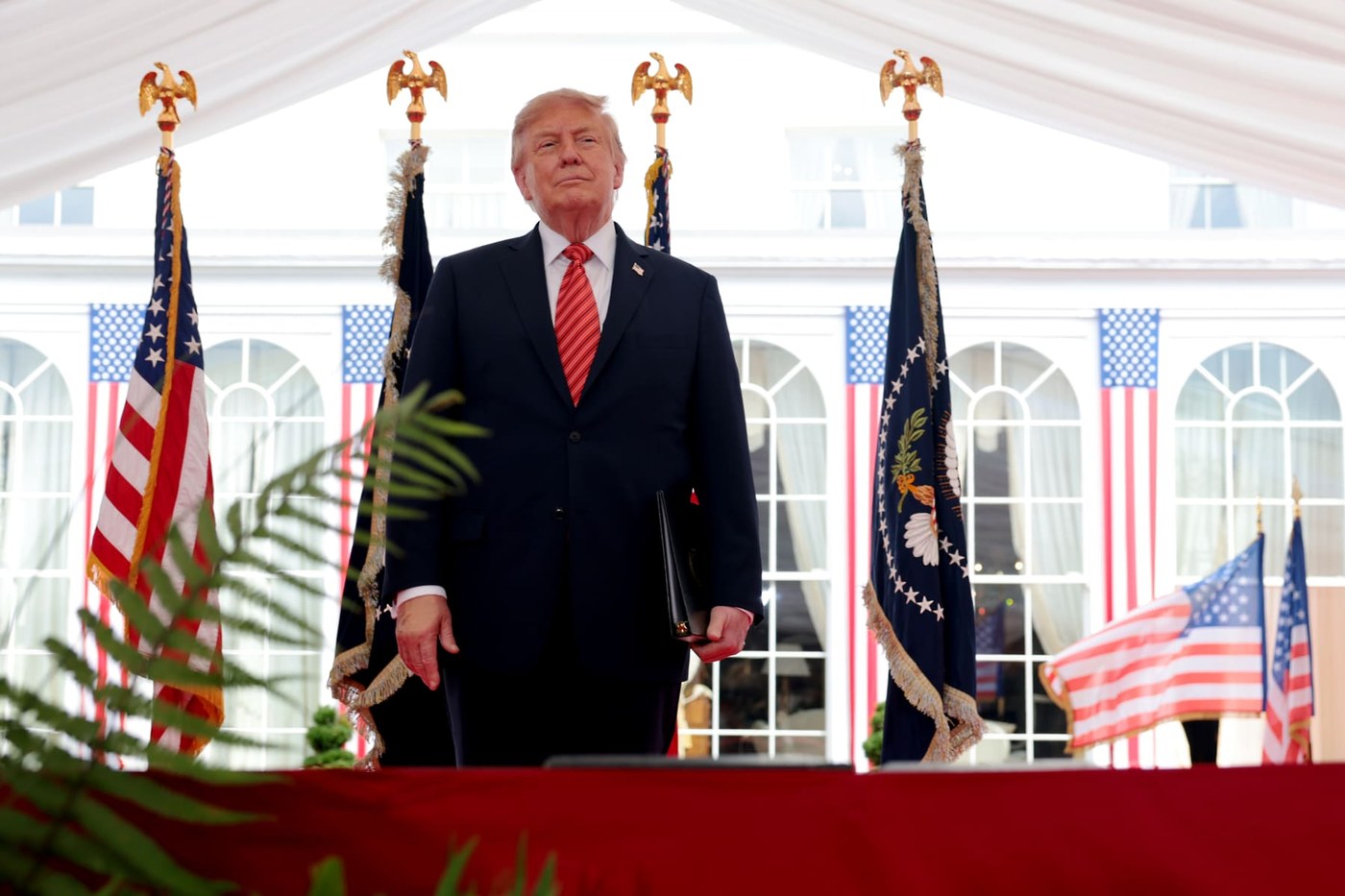
The war in Iran will likely end soon after November's mid-term elections, President Donald Trump said Saturday, and predicted that energy prices would fall sharply once that happens.
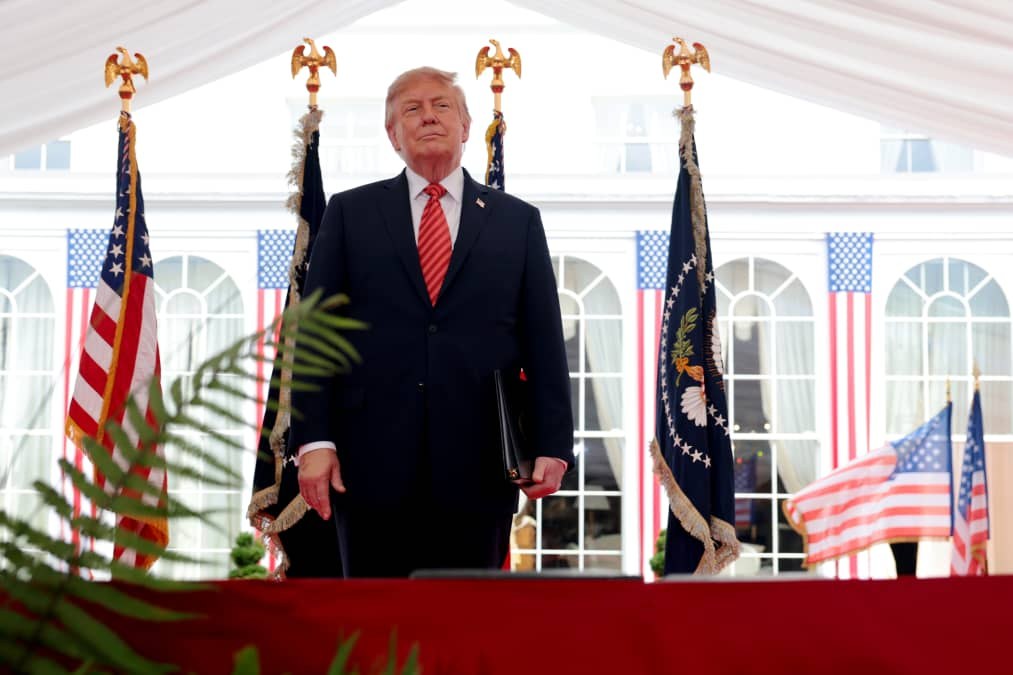
"I think very soon, I think it'll be right after the mid-terms, actually," Trump said on a trip to Ireland when asked by reporters when the Iran war is likely to end. "I would say shortly, and oil will come tumbling down when that happens,"
Oil prices retreated on Friday, but notched sharp weekly gains after soaring above $100 a barrel for the first time in months.
Brent crude oil futures, the global benchmark, settled down 2.8% at $104.61 a barrel. U.S. West Texas Intermediate was down 2.4% to settle at $100.05 per barrel. On Thursday, Brent crude peaked at around $108 a barrel, while WTI hit more than $104.
The price decline came after Iranian state media said Tehran will meet with Gulf states in Oman to discuss the Strait of Hormuz, indicating some diplomacy is taking place despite a week of sharp escalation.
MS NOW quoted a senior government official and a Gulf diplomat as saying that Iranian and Gulf officials will meet in Oman's capital, Muscat, on Monday to sign an agreement that will establish an Iran-Oman shipping route through the Strait of Hormuz.
But Iranian President Masoud Pezeshkian said his country will not surrender, adding that it has resisted aggression from the U.S. and Israel.
"Iran has successfully stood against Israel and the U.S.," Pezeshkian said late Friday as he addressed a gathering of Indian religious leaders in New Delhi. "Since we are seeking truth and justice, we will not yield in front of bullying arrogance."
Pezeshkian's comments ahead of the BRICS Summit in India over the weekend came on the heels of Trump's assertion earlier this week that Iran would have wiped out Israel and the Middle East, and started hitting U.S. cities, if Washington had not taken military action against Iran.
Saudi pipeline attack
Trump also said Saturday that Iran was likely responsible for attacks on Saudi Arabia's crucial East-West crude oil pipeline.
"Well, I think they are. Probably, they are," he said in response to a reporter's question about the attack.
Saudi Arabia said Friday that it shut down the pipeline as a precautionary measure after multiple attacks by drones launched from Iraq.
The drones targeted the pipeline in the Riyadh and Medina regions Thursday morning causing fires and some damage, the Saudi government said. Several people were injured in the attacks, it said.
The Saudis have relied on the East-West pipeline to shift crude oil exports away from Persian Gulf as the U.S. and Iran battle for control over the Strait of Hormuz. The pipeline, which has a capacity of 7 million barrels per day, runs across the kingdom to export terminals on the Red Sea.
Emergency teams were deployed to secure the pipeline and assess its safety after Thursday's attacks, the Saudi Energy Ministry said.
Trump said he spoke with Saudi Crown Prince Mohammed bin Salman following the attack.
Houthis "don't want to fight with us"
The U.S. president also said that Yemen's Iran-backed Houthi rebels have been in contact with his administration.
"The Houthis called us and they don't want to fight with us," Trump said. "They let us know, they don't want to fight with us. They don't want me to go after them."
The Houthis reportedly advanced to Yemen's strategic Perim Island on Friday, delivering a major boost to the militant group's push to take control of one of the world's most important shipping choke points.
The capture of Perim Island, which was reported by several news agencies, citing multiple Yemeni government sources, comes just one day after the Houthis seized Yemen's port city of Mokha on the Red Sea coast. CNBC could not independently confirm the report.
The rapid ground offensive is seen as a severe setback to Saudi Arabia and the Yemeni forces it backs and puts Iran and its proxies on course to exercise control over two critically important oil choke points on either side of the Arabian Peninsula: the Bab el-Mandeb Strait and the Strait of Hormuz.
Perim Island is a small and rocky area of land that divides the Bab el-Mandeb Strait, a waterway that connects the Red Sea to the Gulf of Aden and to global markets.
There are concerns that the Houthis' advance toward the Bab el-Mandeb Strait could have significant ramifications for global trade, particularly if the militant group ratchets up threats or attacks on Red Sea shipping.
The Houthi advance prompted Saudi Arabia's crown prince to personally press Trump for U.S. military intervention, MS NOW reported later Friday, according to a person familiar with the conversations.